 Hurtl
Hurtl
How to Prepare for a Rheumatology Appointment: A Practical Checklist
By Tom, founder of Hurtl.
Rheumatology appointments often ask you to summarise weeks or months of symptoms in a relatively short conversation. How you feel on the day is only one snapshot. What happened between visits is much harder to reconstruct from memory.
Preparing beforehand can make it easier to give your rheumatologist a clearer picture — without needing pages of notes.
Before Your Rheumatology Appointment: Quick Checklist
1. Look Back at Your Symptoms
It is easy to answer “how have you been?” based on today. If today is a better day, the last few weeks can disappear. If today is a flare, it can feel as if everything has been that bad.
Looking back across the period since your last appointment — or since symptoms started, if this is a first visit — usually gives a fairer picture.
Useful things to note, if they apply to you:
- Pain — where it is, how intense it has been, and whether it has shifted
- Stiffness, including morning stiffness and roughly how long it lasts
- Fatigue
- Sleep
- Mobility and daily function — walking, dressing, work, looking after others
- Flares
- Better stretches as well as worse ones
You do not need a perfect log. A few consistent notes beat a blank page. If you want a sustainable way to keep that record, see why track symptoms — even when there isn’t a straight answer. People with axial spondyloarthritis often find morning stiffness duration and fatigue as useful as pain scores.
2. Write Down Any Flares
Flares are easy to underplay later, especially if you are sitting in clinic on a quieter day. A brief factual note is enough.
If you can, record:
- When it happened (an approximate date is fine)
- Roughly how long it lasted
- How severe it felt
- Which symptoms were involved
- Anything notable around the time — illness, missed doses, a busy week, poorer sleep
An association you notice is information to discuss. It does not prove that one thing caused the flare.
3. Think Beyond Pain
Pain is often the headline. It is not always the whole story.
Fatigue, morning stiffness, sleep and mobility can be just as important to mention, and they are easier to forget when you are trying to be concise. So is the effect on ordinary tasks: getting out of bed, commuting, cooking, or concentrating at work.
If you have ankylosing spondylitis or axial spondyloarthritis, stiffness duration after waking is a common example of something that matters over weeks, not only on the appointment day. The same idea applies more widely: name the symptoms that have actually been getting in the way.
4. Review Your Medication
A current list saves time and avoids guessing under pressure. Include prescription medicines, and over-the-counter treatments or supplements if you take them.
It can help to note:
- What you currently take, and doses where you know them
- Anything started, stopped or changed since the last visit
- Whether you have been able to take it as prescribed
- How things have felt since a start or change
- Side effects or concerns you want to raise
This is not a request to change treatment yourself. Bring the facts so your rheumatology team can interpret them with you.
5. Think About What Has Actually Changed
Today’s pain rating is one data point. Change since the last visit is usually more useful.
Better
What has improved?
Worse
What has deteriorated?
New
What symptoms or problems have appeared?
Unchanged
What remains persistent?
Four short lines — better, worse, new, unchanged — can structure the whole update. You do not need to fill every box.
6. Write Down Your Questions
It is common to remember the most important question in the car park afterwards. Write down the few that matter most to you and ask them early, before time runs out.
The right questions depend on your situation. These are examples, not a script:
- Has anything changed since my previous appointment?
- What do my recent results mean?
- Are there symptoms I should monitor more closely?
- What should I record before my next appointment?
- When should I contact the rheumatology team rather than waiting for my next appointment?
- Are there changes in my daily activities or function that would be useful to track?
- What is the plan between now and my next review?
If a question is really about safety — a sudden new symptom, a suspected side effect, or when to call the advice line — put that first.
7. Bring the Information Together
You do not need pages of notes. The aim is a useful overview of what happened between appointments: the main symptoms, any flares, medication, and what has changed.
A one-page summary is easier for a short clinic slot than a long diary. If you already keep notes on paper, in a notes app, or in a symptom diary, pull out the pattern rather than handing over everything.
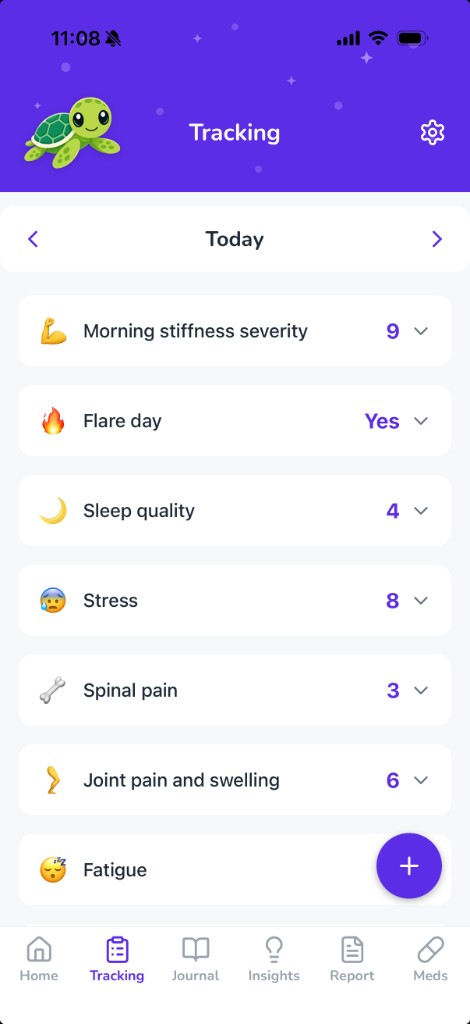
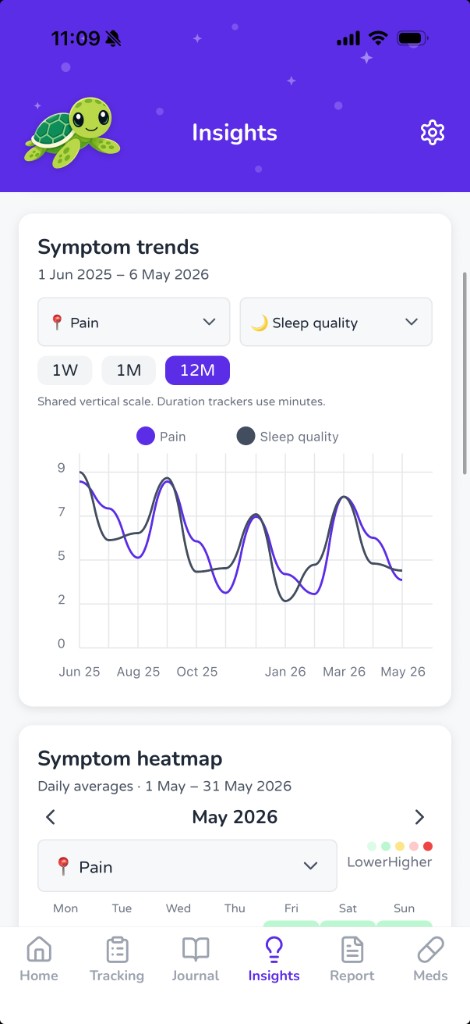
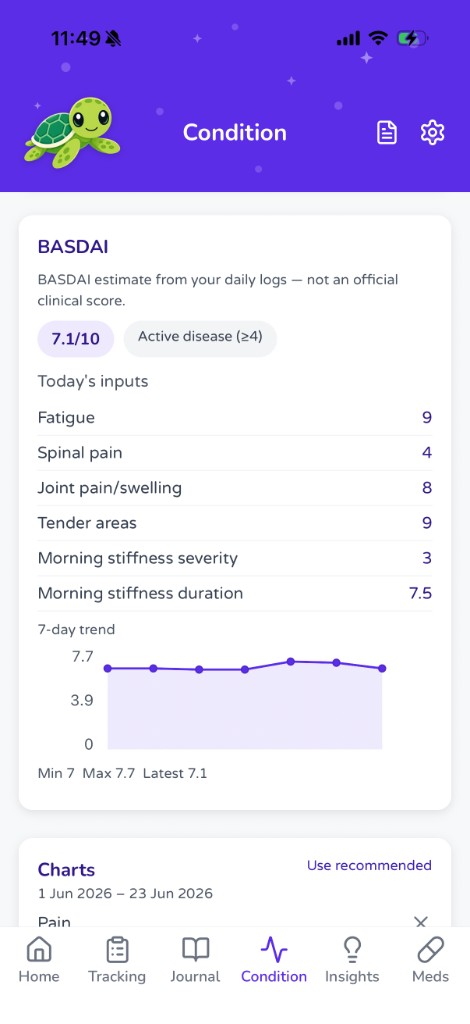
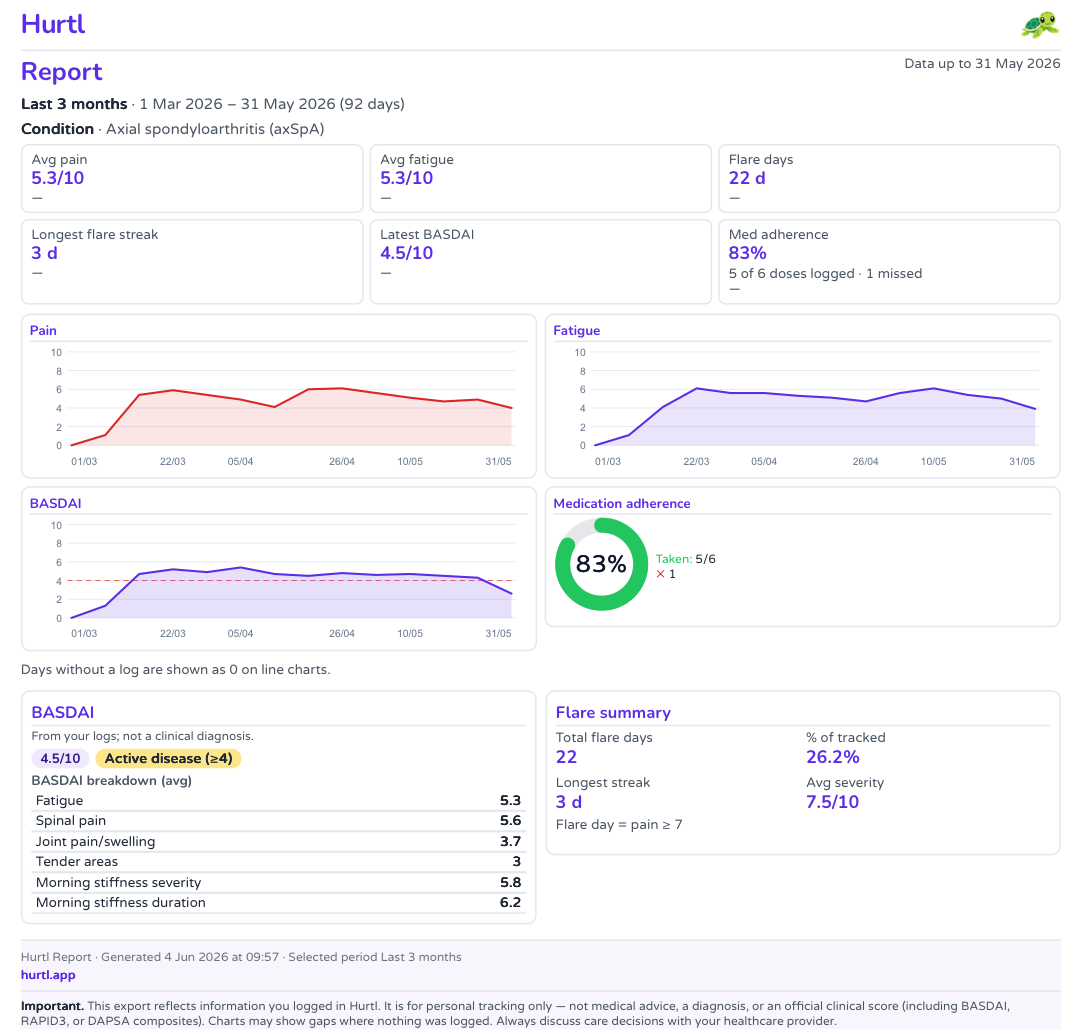
Hurtl can help with that part of the job: recording symptoms between visits, then bringing the history together so you can review it before clinic. The Condition tab has visit-prep summaries and trends. You can also export a clinical report for the period you choose.
What Should I Bring to a Rheumatology Appointment?
Requirements vary. Follow your appointment letter first.
These are commonly useful, rather than universal rules:
- A current medication list, including recent changes
- Symptom notes or a short summary of the period since your last visit
- The questions you want to ask
- Relevant records or results if the clinic has requested them — for example recent blood tests or imaging held elsewhere
- Appointment details, and any forms you were asked to complete
Some NHS rheumatology services, for example, ask people to bring a medication list and any specific questions. Others send a questionnaire in advance, or ask for tests before the visit. Do not assume another clinic’s list applies to yours.
How Should I Prepare for My First Rheumatology Appointment?
A first visit is often about building a picture, not only reviewing a known condition.
It can help to prepare:
- A symptom history — what you notice, where, and how it affects you
- An approximate timeline of when things started and how they have changed
- Previous investigations or treatment, if you have had any
- Current medicines, allergies, and other medical history
- Relevant family history, if you are asked
- Your questions and concerns, written down
The Arthritis Foundation suggests keeping a symptom log and a medication list, and going in with the questions that matter most. Many first appointments also include a physical examination of joints.
What happens next still depends on you and the service. Some visits include blood tests, a urine sample, or imaging; others do not, or not on the same day. You may not leave with a diagnosis. That is common and is not a sign you prepared badly.
If you are still waiting for a label, it can help to understand terms such as ankylosing spondylitis and axial spondyloarthritis so questions about imaging or names are easier to ask. It is not required homework.
How Hurtl Can Help Between Appointments
Remembering the gap between visits is the hard part. Hurtl is built to make that record easier to keep and easier to review.
Between appointments you can:
- Record symptoms regularly, in under a minute
- See how things have changed over time
- Review Insights for trends
- Use visit prep on the Condition tab
- Bring the period together in a report you can share if you choose
It does not diagnose, treat, or replace your rheumatology team. Scores in the app are estimates from your entries, not official clinical scores.
Condition-specific guides if you want to go deeper: how to track ankylosing spondylitis symptoms, how to track rheumatoid arthritis symptoms, how to track lupus symptoms and lab results, or the axial spondyloarthritis, rheumatoid arthritis and psoriatic arthritis trackers.
Hurtl is available on iPhone, with Android on the way.