 Hurtl
Hurtl Psoriatic Arthritis Symptom Tracker
Log PsA symptoms as you go, see your DAPSA estimate update on the Condition tab, and export a clinical PDF for appointments — built from your data, not guesswork.
Available for iPhone
Hurtl is not a medical device and does not provide medical advice, diagnosis, or treatment. Always speak to a qualified healthcare professional before making medical decisions.
What to track with psoriatic arthritis
A PsA symptom tracker works best when it covers joints, skin and entheses together — not a generic pain diary alone.
Joint pain and swelling
Record which joints hurt, stiffness and swelling. PsA can affect fingers, toes, spine and other areas — a log makes shifting patterns easier to spot.
Skin and psoriasis symptoms
Skin flares often run alongside joint flares. Note plaque severity, new patches or improvement when treatment changes.
Enthesitis (tender spots)
Pain where tendons or ligaments attach to bone — heels, elbows or other sites — is common in PsA. Tracking helps you describe it clearly at clinic.
Fatigue
Fatigue is common in psoriatic arthritis but easy to forget between appointments. A simple daily log builds a clearer picture over time.
Flares
Mark harder days and note what was different. Over weeks, flare frequency and recovery time become easier to see than from recall alone.
Medication response
Record doses taken, missed doses and how you felt afterwards. That context makes it easier to judge whether DMARDs, biologics or other treatments are working.
Why symptom tracking helps
Psoriatic arthritis often affects more than joints alone. A consistent log turns scattered days into evidence you can export before your next appointment.
Walk into appointments prepared
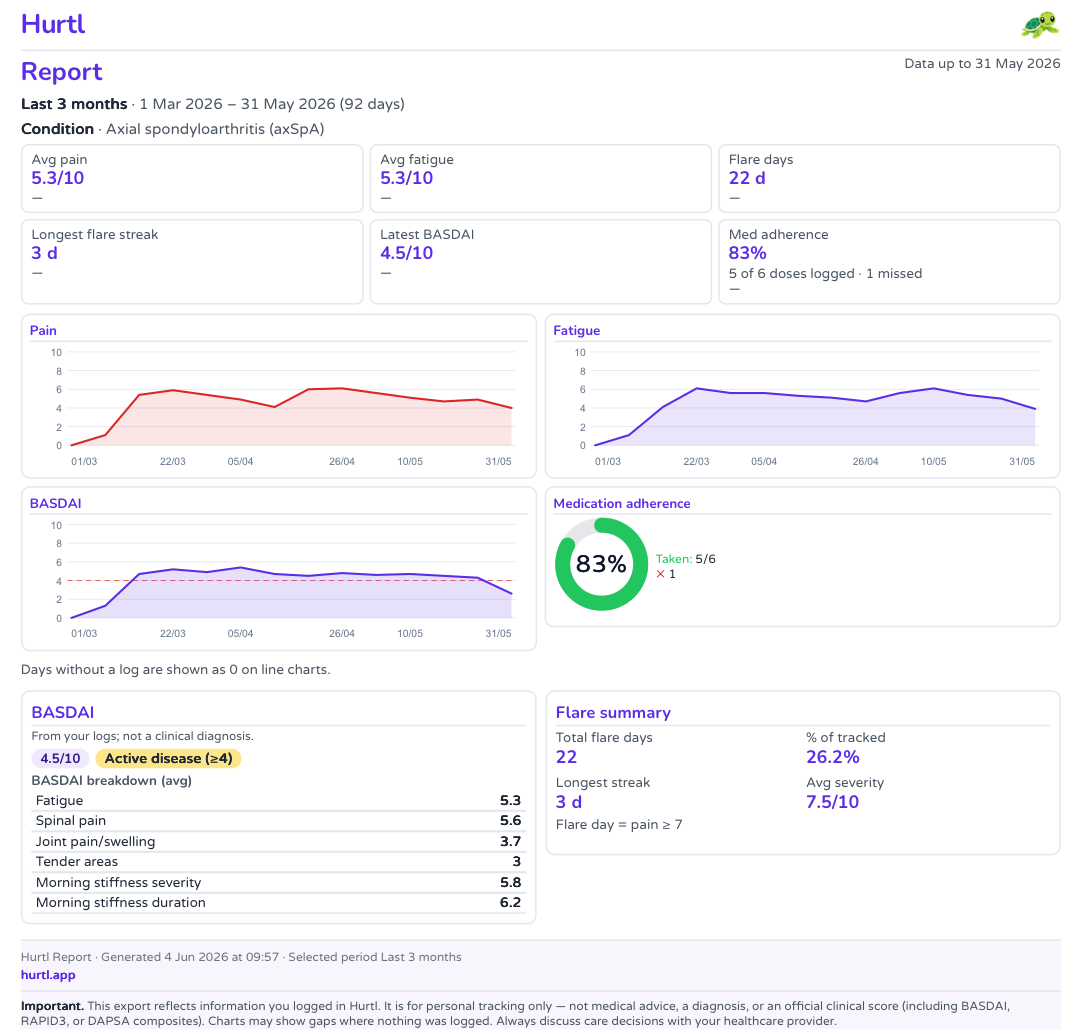
Export a PDF that summarises the months since your last visit — so you are not guessing whether joints, skin or enthesitis were worse in March or May.
Spot symptom changes early
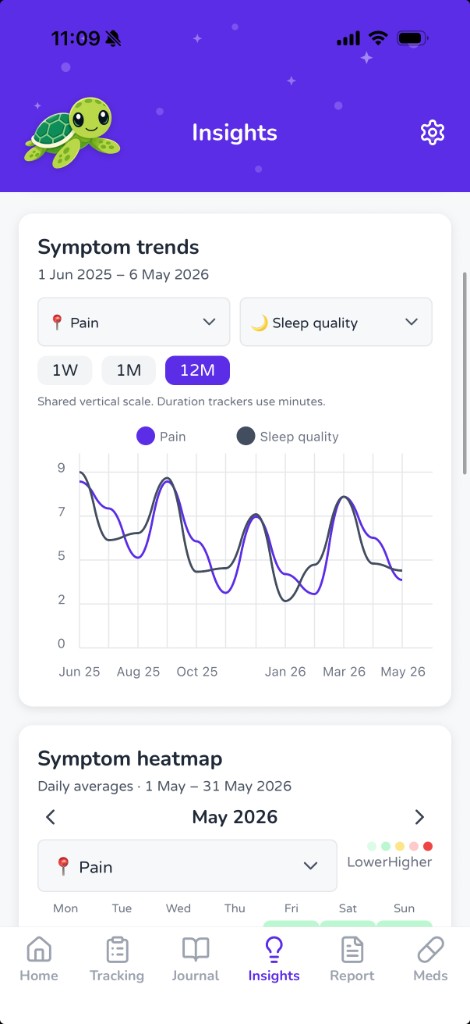
Daily logs turn vague memory into a timeline. You can see when skin flared, joints stiffened or fatigue crept in — before symptoms pile up.
Understand flare patterns
Flares rarely appear from nowhere. Tracking helps you connect joint, skin and enthesis symptoms to triggers or treatment changes so you can respond sooner.
Track medication effectiveness
Starting or switching a biologic or DMARD? Adherence and symptom trends in your report show whether treatment is helping over weeks, not just today.
Take the guesswork out of rheumatology appointments
Appointments often hinge on “how have you been since we last met?” — and memory is unreliable. Hurtl collects your psoriatic arthritis data over time, then turns it into a PDF report you can bring to clinic: averages, trends, DAPSA, lab results where relevant, flare days and medication adherence in one place.
-
Log symptoms and labs in the app
Track pain, stiffness, fatigue, flares, lab results and medication for psoriatic arthritis as you go — not in a rush the night before clinic.
-
See patterns between visits
Charts and DAPSA update from your entries so you know how the last weeks actually looked, not how you feel today. Scores in the app are estimates from your daily logs — not official clinical scores.
-
Export a PDF for your appointment
Choose the date range, pick what to include, add notes for your clinician, and share a doctor-ready PDF from Home, Condition, Insights or any tab header.
You choose the date range, sections and clinician notes. Your log stays on your device until you export — the report is for preparation, not a clinical diagnosis. Clinical PDF export is included with Hurtl+.
DAPSA and how Hurtl helps
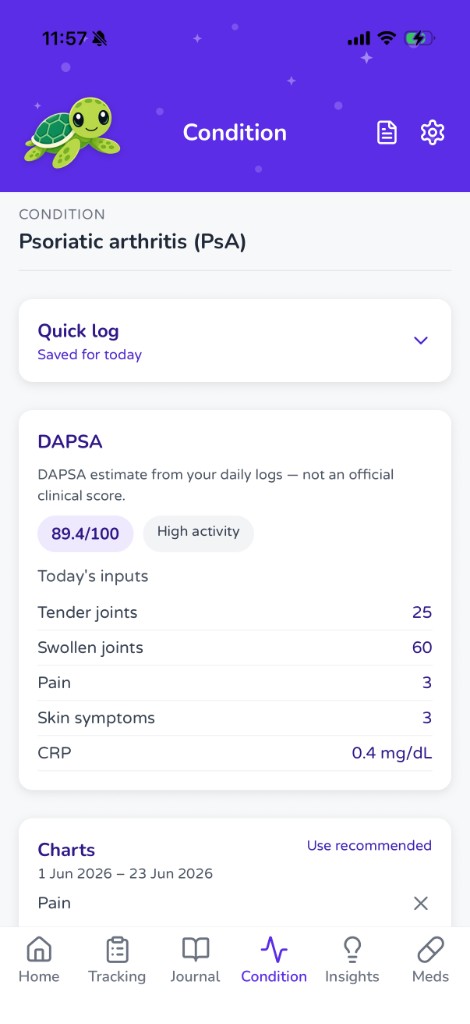
DAPSA (Disease Activity in Psoriatic Arthritis) combines tender and swollen joint counts, patient-reported pain and global assessment, and often CRP. Hurtl calculates a DAPSA estimate from your daily logs on the Condition tab — including CRP when you record lab results. It is an estimate from your entries, not an official clinical score.
The five DAPSA components (clinical)
When your rheumatologist calculates DAPSA, they combine joint counts, patient-reported scores and inflammation from blood tests:
- Tender joints Number of joints that are tender on examination
- Swollen joints Number of joints with swelling
- Pain Overall pain you have felt (0–10)
- Patient global assessment How active your arthritis has felt overall (0–10)
- CRP Blood inflammation marker (mg/dL), when available from your care team
Your DAPSA estimate in Hurtl
Hurtl adds tender and swollen joints, pain, skin symptoms and CRP from your logs for a running DAPSA estimate. You see today’s inputs and an activity label on the Condition tab.
Scores in Hurtl are estimates from your daily logs — not official clinical scores. Lower scores generally mean less activity. Your care team may calculate DAPSA differently at appointments.
Read the full DAPSA guide · Free DAPSA calculator
What else Hurtl provides
Joint involvement tracking, CRP lab results, visit prep for the last 30 days, flare history and clinical PDF exports — so appointments start from what you recorded, not memory.
How Hurtl helps
Hurtl is built for inflammatory arthritis, not a generic wellness app. Collect PsA data daily, spot trends in the app, and export a PDF when it is time for clinic.
Condition-specific symptom tracking
Log joint, skin, enthesis and fatigue signals from pre-set lists — or create custom trackers for what matters to you.
Flare logging
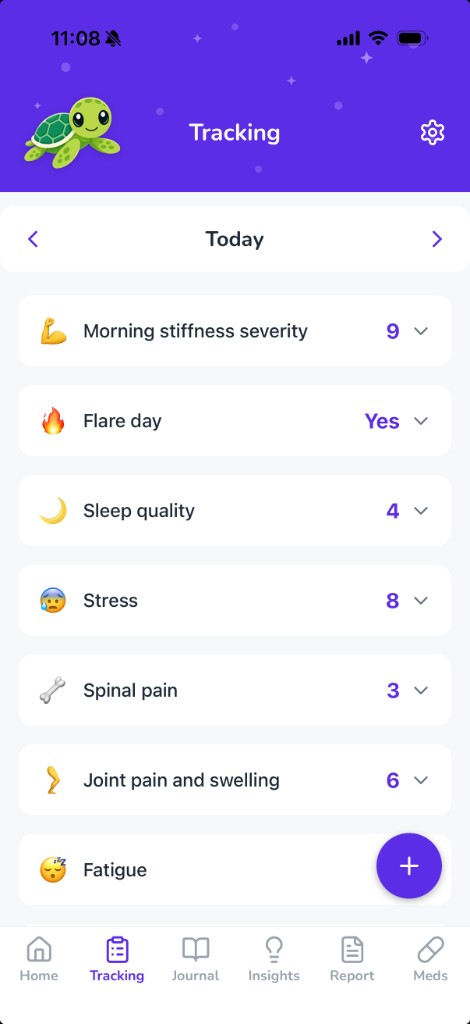
Mark harder days and note what was different. Trend charts make flare patterns visible over weeks and months.
DAPSA from your daily logs
Hurtl calculates a DAPSA estimate from tender and swollen joints, pain, skin symptoms and CRP — with a 7-day trend and activity label. An estimate from your logs, not an official clinical score.
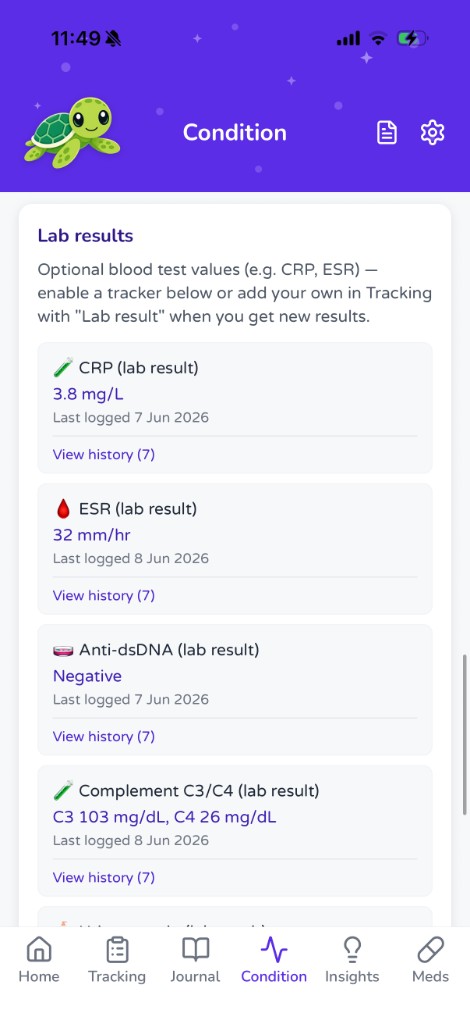
Lab results
Store CRP when you get blood tests — with history per test. CRP feeds into your DAPSA estimate when logged.
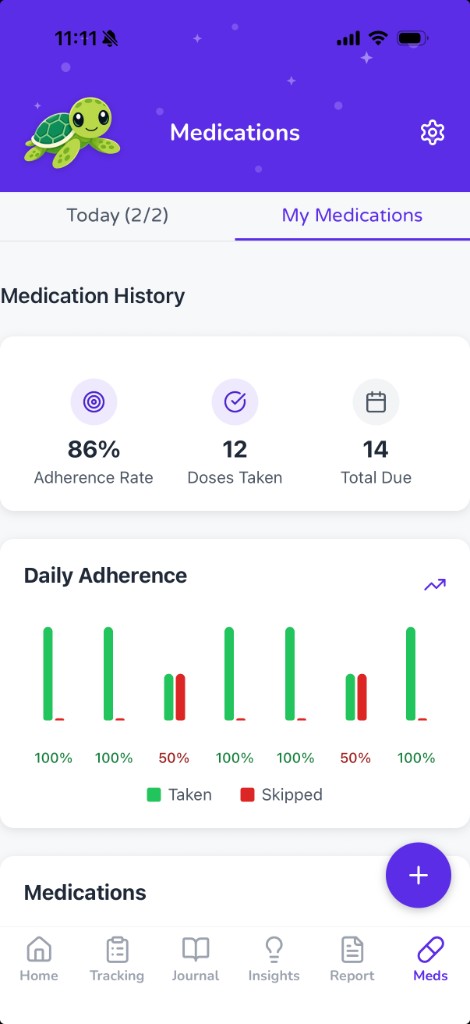
Medication reminders
Set reminders for injections, oral treatments or other therapies. Track adherence alongside symptoms to see the full picture.
PDF reports for appointments
Turn months of logs into a shareable export: summary metrics, pain and fatigue charts, flare days and medication adherence — ready before you sit down with your rheumatologist.
Frequently asked questions
What should I track with psoriatic arthritis?
Most people find joint pain, skin symptoms, enthesitis, fatigue and medication adherence the most useful starting points. Add flare notes when you want more detail. You do not need to log everything every day — consistency beats completeness.
What is DAPSA?
DAPSA (Disease Activity in Psoriatic Arthritis) is a composite score used to measure PsA activity. It combines tender and swollen joint counts, patient-reported pain, a global assessment of arthritis activity, and often C-reactive protein (CRP) from blood tests. Rheumatologists use it to monitor disease over time.
How is DAPSA calculated?
DAPSA is the sum of tender joint count, swollen joint count, pain score (0–10), patient global assessment (0–10), and CRP in mg/dL. The total reflects overall disease activity; lower scores generally mean less activity. Your rheumatologist will interpret results in context, including when CRP is not available.
Does Hurtl calculate DAPSA?
Yes. Hurtl calculates a DAPSA estimate from your daily logs — tender and swollen joints, pain, skin symptoms and CRP when you record lab results — with a trend on the Condition tab. It is an estimate from your entries, not an official clinical score. Your rheumatologist may use their own scoring at appointments.
Can tracking help with PsA flare management?
Yes. A symptom diary helps you notice when joint or skin symptoms are building, what may have triggered them and how long recovery takes. That makes it easier to adjust activity, contact your rheumatology team early or prepare for appointments with concrete examples.
Can I share symptom history with my doctor?
Yes. Export a PDF report for the period you choose — averages, charts, flare summary and medication adherence from your logs — and share it at your rheumatology or GP appointment. You control when and what leaves the app.
How does Hurtl help before a rheumatology appointment?
Log symptoms as you go, then generate a report before clinic so you are not reconstructing the last three months from memory. That takes the guesswork out of questions like how often you flared or whether your current treatment is helping.
Download Hurtl
Important
Hurtl supports self-tracking and preparation for conversations with clinicians. It does not diagnose, treat, or monitor medical conditions in a clinical sense. If you are experiencing an emergency, contact local emergency services. Read how we handle data in our privacy policy, or email tom@hurtl.app for privacy requests.